Transformative education for global impact


We spoke to Naheed Bardai following the launch of the college’s new 10 year strategy Transformative Education for Global Impact as he set out his vision for the future and explains how people can get involved.
You’ve just launched the new 10 year strategy for the college. How does that feel?
It feels really great to announce the new strategy and begin to let the world know what we’re up to. Many people know about the college through our history, which is hugely important as we wouldn’t be here today if it wasn't for that. But then to some extent, people may think, ‘so what’? Yes, you’ve done some great work in the past, but what is UWC Atlantic doing right now and what are its plans for the future?
What are you most excited about sharing?
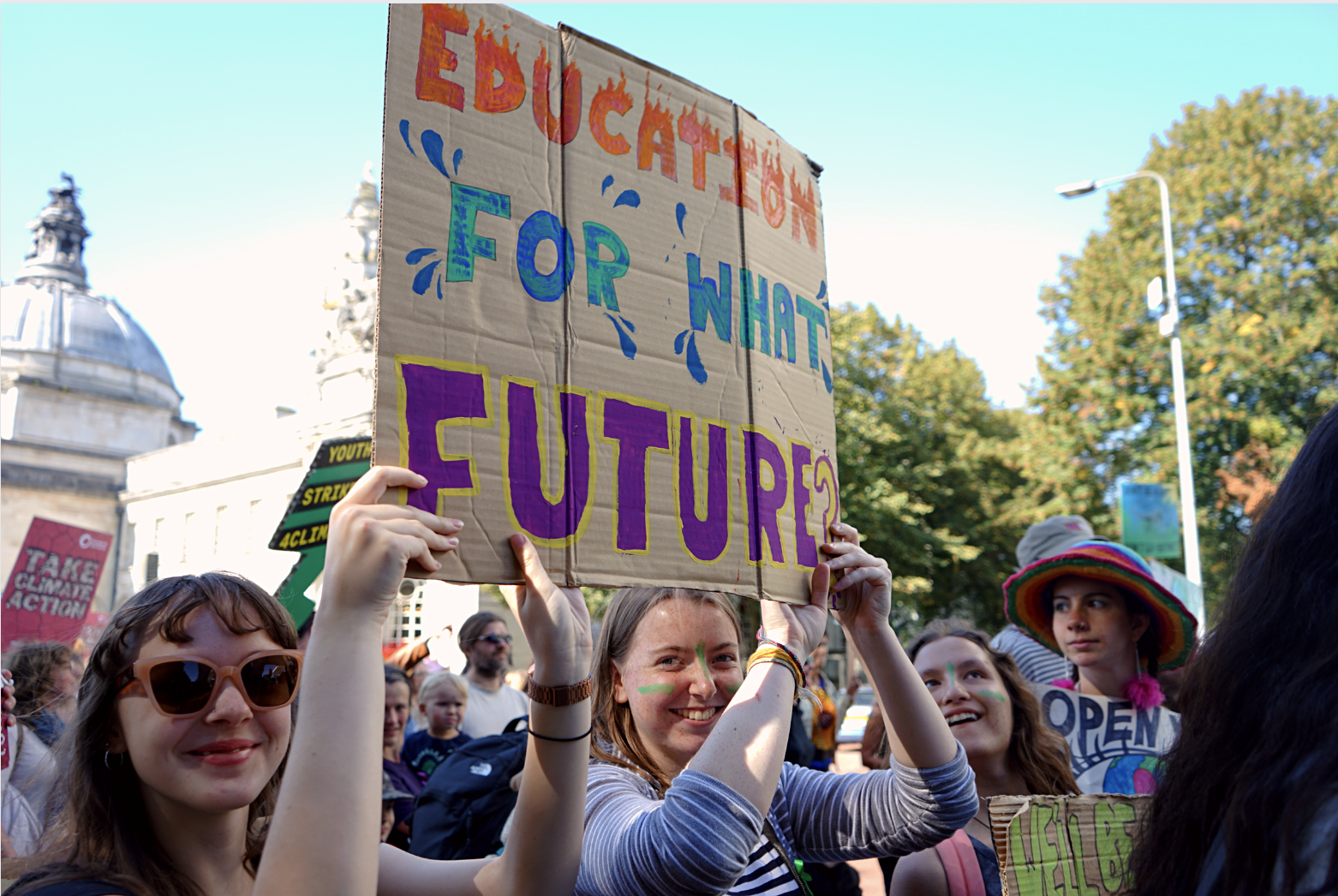
Firstly, I get to share why we are doing this in the first place, which is to take deliberately diverse students and give them an education rooted in systems transformation. An education where they can recognise which systems are unfair or unjust, and to advocate for better ones. And to find ways that shift and transform those systems, resulting in better outcomes for people and the planet.
For me, there’s also something quite magical about combining a new education for students (the systems transformation pathway) with a new hub that brings it all together for students and alumni alike (the Centre for Systems Transformation). Providing a space for thought leaders of today and tomorrow who can inspire one another along the way.
For students, it’s a completely new type of education, for alumni it’s a support mechanism for what they’re working on in the world, and for both, it’s a place to come home to.
What would you like people to take away from the new 10 year vision?
I really hope the new vision communicates just how deeply interconnected we all are through the systems we share (whether we like it or not). The social injustices and ecological disasters we see now are a product of that. And I hope people get to see even more that their flourishing is interconnected with another person’s flourishing; that their pain is interconnected with another person’s pain. And so on.
As human beings we have plentiful resources, but how are they distributed? Not all of us get to experience this abundance, so we need to consider how to share this world in a more compassionate and interconnected way. And this is where our new systems driven approach really comes to the fore. Because the issues we see are not isolated or individually unique problems - they are manifestations of wider systems in which they sit.
Finally, I hope the new strategy reminds us all not to put the world’s problems on the shoulders of teenagers. For us to say, ‘sorry for the harm we’ve caused, this is on you.’ That is not how it should be.
What is your thinking behind the Systems Transformation Pathway aspect of the new strategy?
The new pathway comes from a place of wanting a 180 degree opposite of the traditional education model. Textbooks, exams, and all that entails.
If you look at education over the last decades, its trajectory of change has been relatively flat, especially when compared to things like technology. And I worry that the kind of education we’re providing students is not what the world needs (which, unlike education, is changing exponentially). That’s not to say the current education model isn’t still useful. It just shouldn’t be the only way.
What will the new pathway look like for students?
Students will be selected in the early stages of their time at AC. From there, they will go into a collective experience - developing an accountability to one another and learning how to make good decisions together. We’ll then get them to look at things like ecology and economic systems, and ask themselves questions such as: ‘How do we tell stories to motivate action? Why is a sense of belonging important in society and how do we create systems that encourage this?’. They’ll also get to learn about power, where it resides, how it’s used, and how it’s distributed.
The students in the first year will then go into one of four impact areas: food systems, energy systems, human migration, biodiversity. There’ll be five students in each impact area, with a teacher attached to each one. Once in smaller groups, they will apply everything they’ve learned to a situation in their home context (whatever that means to them) by engaging in a ‘self-directed intervention’ in that community. The summer break will include an internship in that area where we hope to partner them with members of the UWC community.
After the break, students will engage in a 'collaborative intervention' within the same impact area in Wales. We will end the cycle with a festival, looking at all the things that worked, and sharing those insights with students and the wider community.
How can alumni find out more about both these projects and how can they get involved?
Having alumni involved across time, talent and treasure is hugely important, as ever.
Firstly, we need impact area experts to help mentor the students. People who are impacting food systems and architecting food systems in the world, similarly people working in energy, people working in biodiversity more broadly, as well as those working on human migration. Through this, we hope to create clusters of expert practitioners. Groups that come together to create a support network for themselves and the students on the programme.
Secondly, we will need support on the summer internship opportunities. For example, enabling students to take part in something or helping to house them.
Finally, there is the financial support we need to make this work. How I see this is that we’re a start-up of sorts, and we’re looking for lots of founding investors to help get this off the ground!
The impact from all this support will be immeasurable. And by working together, we could change the way education is taught globally, especially given our partnership with the International Baccalaureate (which provides both quality assurance and a mechanism of scaling we don’t have). Ultimately, this is definitely not just for the benefit of just 20 students at AC, but any young person around the world.
What is your hope for the next 10 years?
For me it’s about allowing the college to be the kind of institution I think the world needs. A college that equips its students to help shape systems in the world around UWC’s mission. I also hope alumni will see this as an opportunity to engage and re-engage with the college on what they’re up to in the world, and to see themselves in this as much as the students. After all, this is still their home.
In material terms I hope we set the foundation for this school to continue to be a flourishing school for the next 100 years. This includes increasing financial assistance for those who wouldn’t otherwise have been able to afford it, and to be more engaged in the country that all our students call home for two years.
What conversations are being had across the UWC movement?
There’s a lot of excitement about it. We have also been working closely with UWC International and I’ve had a lot of conversations with its Executive Director. This is really important as I want the college to align closer with the wider movement. I believe that UWC as a whole is stronger when each of our schools are stronger, when each of our alumni are stronger, when each of our national committees are stronger. And the impact we can have as a movement is far greater than any one college could ever have.
If you are interested in pioneering this bold vision of education with us, and have expertise, insight or networks in the areas of Biodiversity, Energy, Food, Migration or new technologies, please scan the QR code below or follow our Pathway Pioneers survey link and tell us how we could pave the way together!


You can get involved in the following ways:
- Join us as a volunteer guest speaker / lecturer / practitioner
- Contribute to our curriculum design in your area of expertise
- Make impactful introductions to organsations or people in your networks
- Open doors for our students to access opportunities for real-world learning
 Built with Shorthand